

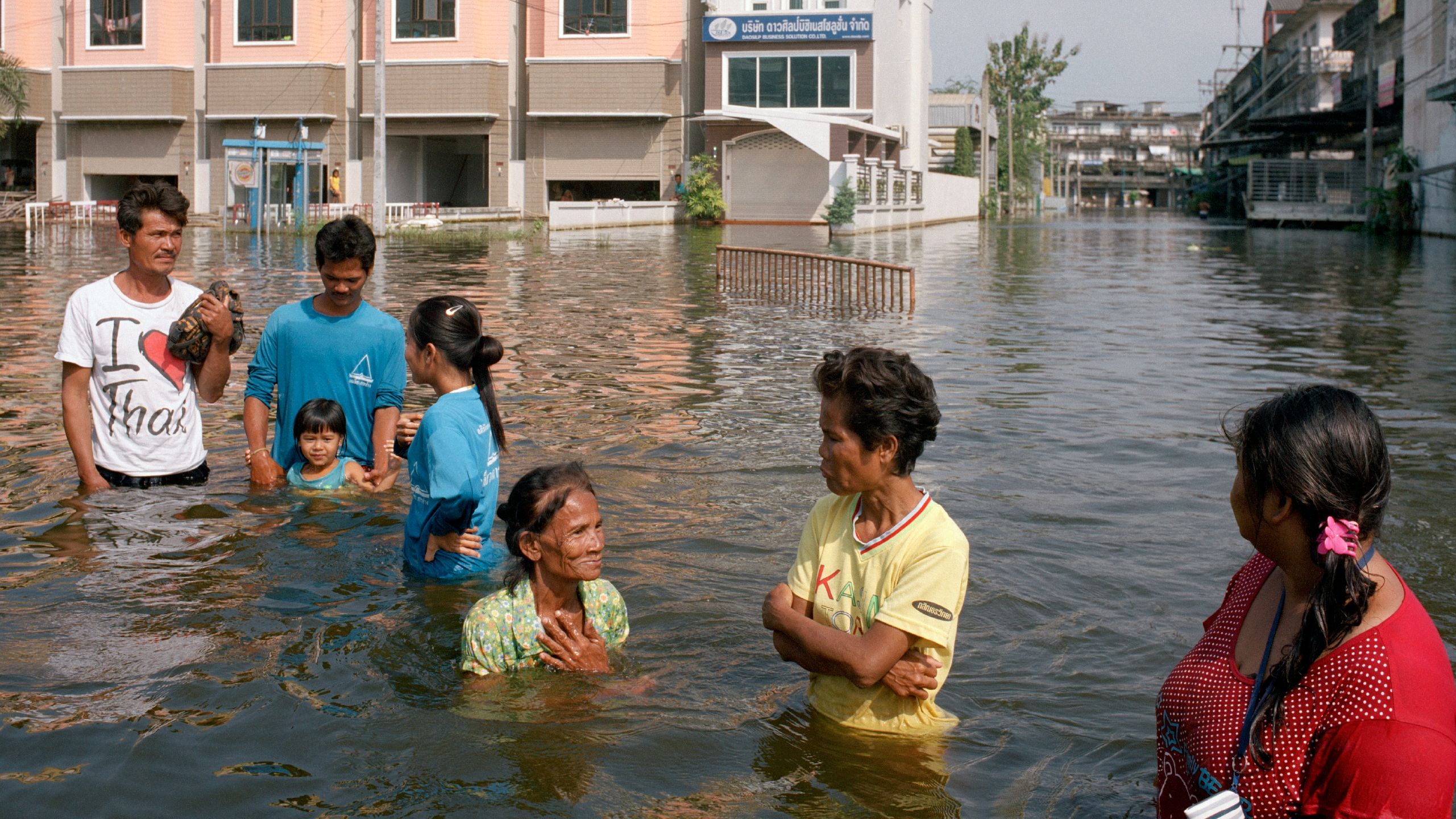
Flood events are natural disasters that regularly occur in Thailand, with varying severity each year depending on the prevailing weather conditions. Many people have experienced flooding to some extent and have repeatedly called on the government to address this problem. Throughout history, regardless of the government in power, there has been criticism regarding flood management, which has become a common issue. Politically, it is also used as leverage among different factions, especially following the devastating floods of 2011.
Amidst the political turmoil, it is crucial to observe flood management plans that come with varying conditions and situations. While many believe that the government often reacts slowly or inadequately to the situation, each past government, including the current government of Anutin Charnveerakul (อนุทิน ชาญวีรกูล), has had different flood management plans that reflect their vision and effectiveness clearly. Thairath invites a look into the flood management issues stemming from government plans from 2011 to 2025, exploring other dimensions of the flooding problem and leading to more effective flood response strategies. Does political uncertainty hinder unified management? Managing floods across a country with diverse geography is a significant challenge, and political uncertainty is a key obstacle that alters the flood management plans.
Particularly, the determination of who is the ‘host’ or the central authority for issuing commands varies among governments. Prior to the major flooding in 2011 during the Yingluck Shinawatra (ยิ่งลักษณ์ ชินวัตร) administration, previous governments had agencies and laws that defined responsibilities for flood management but lacked a clear host for managing the problem. Typically, the Royal Irrigation Department, the Ministry of Agriculture, the Department of Disaster Prevention and Mitigation (DDPM), the Ministry of Interior, and Bangkok acted primarily within their respective duties. Each agency did not have the authority to issue commands across all parties, leading to fragmented efforts in their specific areas. The lack of a clearly defined host became apparent during the Yingluck administration, which began in August 2011, coinciding with the most severe floods in October. Entering office during a crisis with an existing management system lacking a host resulted in significant damage.
Although at that time, the Yingluck government recognized this problem and established a host named the ‘Flood Relief Operations Center’ (ศูนย์ปฏิบัติการช่วยเหลือผู้ประสบอุทกภัย, ศปภ.), it was often criticized for lacking integration among agencies, causing delayed and inadequate assistance. It was also the main decision-maker in designating areas as ‘sacrificial’ or water-absorbing zones, such as Ayutthaya and Pathum Thani, to protect key economic areas like central Bangkok and industrial estates.
This issue led to significant conflicts; however, on the other hand, the flood management plan regarding relief was taken seriously by the Yingluck government, which pushed to expedite financial aid as quickly as possible. This included measures to assist businesses and citizens through tax reductions and low-interest loans to recover from the damages.