

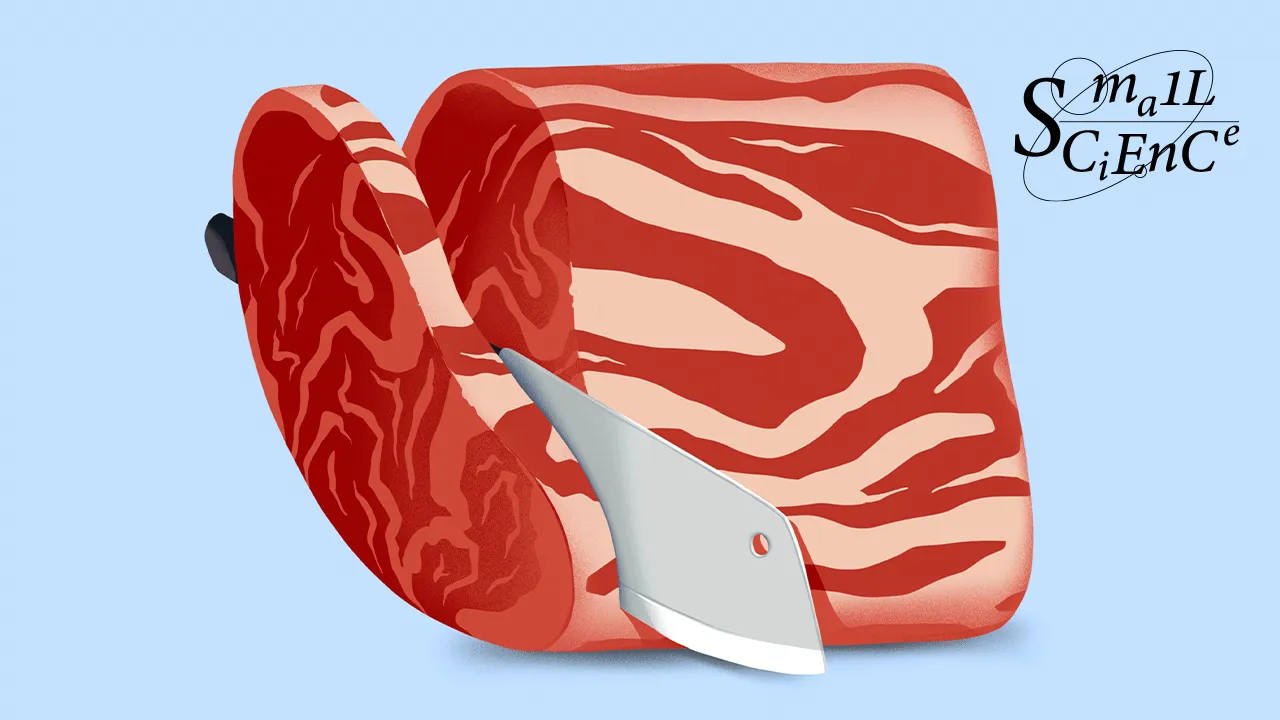
Illustration: Nuttal-Thanatpohn Dejkunchorn
A scene in the film“Hunger: The Hungry Game”which has been widely discussed, both positively and negatively, is the scene of slicing exquisitely expensive meatWagyu beef A5
The question is, this A5 Wagyu beef— is it some heavenly, miraculous meat, or just how important is it to the point that gourmets and chefs in the food industry give it such significance?
In fact, Wagyu A5 is considered premium, high-grade beef. The meat is classified into grades A to C, with A being the highest. The trailing number, 5, goes even higher, because the number after A indicates the amount of fat marbling embedded in the beef
This fat is commonly called marbling, but scientifically it is intramuscular fat. This fat is ranked by a marbling score that runs from 1 to 12, with 12 indicating the highest level of intramuscular fat, making the meat tender, succulent, and very delicious
Therefore, the number A5 is not the absolute best Wagyu, but within culinary circles, from A5 upward the meat is considered excellent. In practice, beyond this level, most people’s tongues can hardly distinguish how delicious it is
The next question is: how did Wagyu A5 come about?
Generally, these cattle feed on specially formulated grasses and cereals, or they live in regions with mineral content different from others, which leads to the next science topic: environment. Beyond the place of farming, the cows must be in areas with good air and low stress; in some places, they even have music played for the cows, especially classical music believed to help keep the cows in a good mood
It should be noted first that premium meat is not limited to Wagyu alone. In Japan, many are familiar with Wagyu, Kobe beef, or Matsusaka beef, and some may think they are completely different
But in fact, Kobe or Matsusaka beef are Wagyu as well; Kobe or Matsusaka refer to the “region” where these cows are raised, which gives the meat its distinctive characteristics, but all share marbling. Wagyu beef must come from four Japanese breeds: Japanese Black (which is raised the most and yields the most marbling), Japanese Brown, also called Akaushi, Japanese Polled, and Japanese Shorthorn
Therefore the first science behind Wagyu lies in the genetics of the cows. If the cattle are of another breed, they would not be called Wagyu. But genetics alone is not enough; Wagyu farming must also consider the nutrients used to feed the cattle
The details of the cattle’s diet for Wagyu are vast and treated as a science with many secrets, because nutrients must be controlled precisely and balanced to produce marbling. Some might have heard about massaging cows to tenderize the meat, but generally these cows eat specially formulated grasses and cereals, or reside in regions with different mineral content, which leads to the next science: environment. The cows must live in places with good air and low stress; in some places they even have music played for the cows, especially classical music believed to help keep them in a good mood
But the science mentioned above relates to cattle farming, which is not very connected to our Hunger film, because the film discusses slicing the beef to produce a proper cut
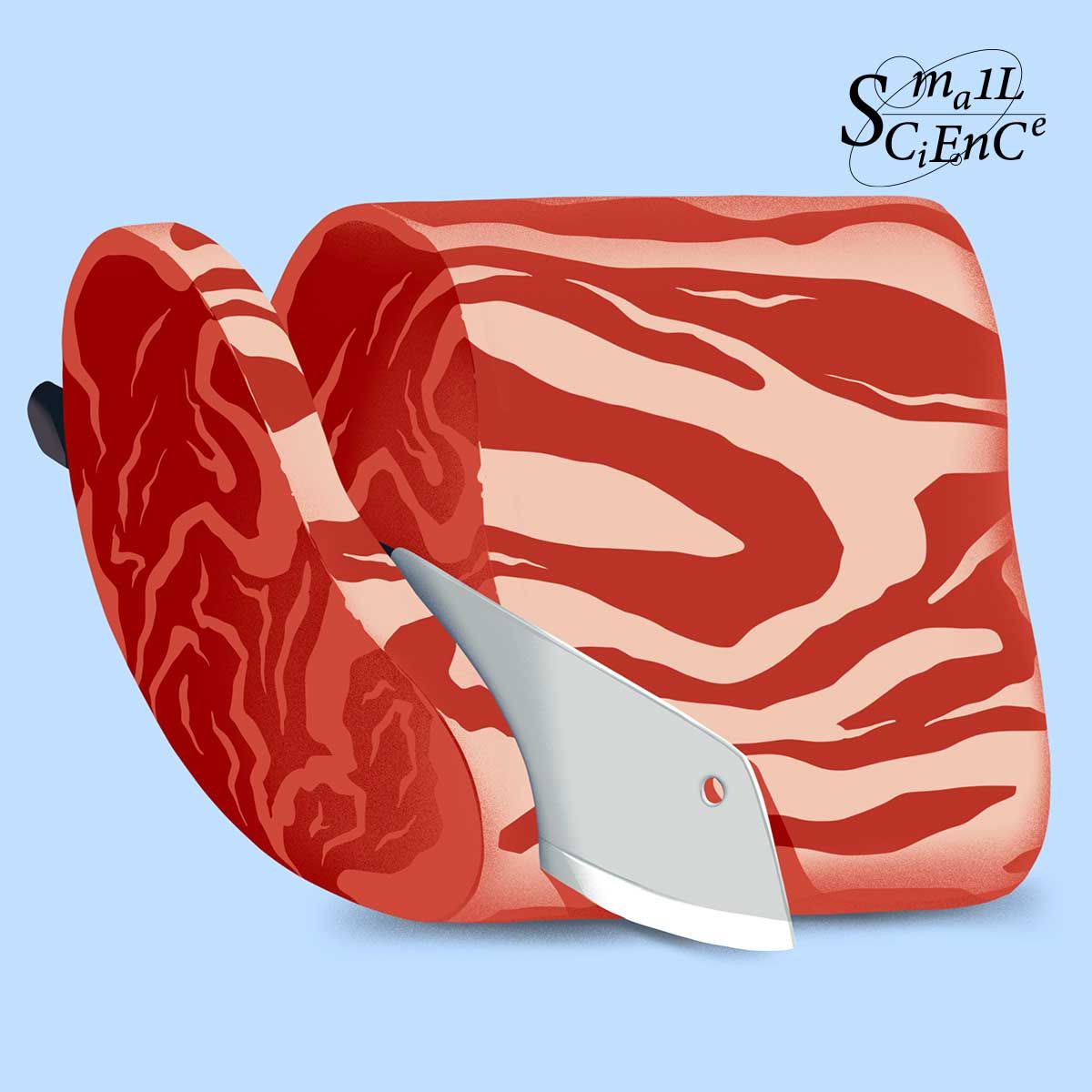
Many people may think that slicing beef is only a matter of skill and practice. In fact, understanding the science of beef slicing can help ensure better quality and help preserve the meat’s quality
The very first factor is temperature
Wagyu A5 meat is like fine wine in this regard—temperature is extremely important. When pouring wine, you hold the bottle near the bottom to avoid letting body temperature affect the bottle’s temperature; in the same way, slicing meat must be mindful of temperature, because the meat is full of proteins. If the temperature rises to a certain level, the proteins can denature, changing the meat’s quality
More importantly, the meat must rest before slicing to ensure the cut’s temperature is uniform throughout. Without this rest, the meat may dry out or become too tough, because different parts of the piece may have different characteristics if the temperature is not even
Another very important matter is understanding the cow’s muscles
When slicing beef, the key is to cut across the muscle fibers, which makes the meat even more tender because it shortens the muscle fibers, making it easier to chew
Muscle fibers are the foundation of a muscle. They are long cylindrical cells aligned in parallel, each containing smaller units called myofibrils, or “tiny muscle fibers,” which are responsible for contracting and relaxing the muscle
These muscle fibers come in two main types: slow-twitch fibers and fast-twitch fibers. Slow-twitch fibers support endurance activities, such as long-distance running or climbing, and resist fatigue better; fast-twitch fibers are for explosive power in short bursts like sprinting or weight lifting
Wagyu A5 meat is like fine wine—temperature is very important. When pouring wine, you hold the bottle near the bottom to avoid temperature interference; likewise, slicing meat must pay close attention to temperature, because the meat is filled with proteins. If the temperature rises to a certain level, the proteins can denature, changing the meat’s quality
And at the very base, smaller than the muscle fibers are myofilaments, composed of proteins called actin and myosin, which interact to create movement—the contraction of muscles. The force that controls movement (in this case, the striped muscle) is a nerve signal, which releases calcium ions into the muscle fibers, triggering chemical reactions that cause actin and myosin to slide, producing contraction
Therefore, to cut Wagyu beef well, one must understand the cow’s muscles deeply. It may not be pure science, but with enough practice one learns how slight differences in slicing across different parts yield different results
Many people think the important part of slicing practice is making cuts ultra-thin, which is true—thin slices can be very tender. But slices that are too thin can dry out and become tough; thicker cuts are juicier and tastier, but if too thick they can be chewy. The optimal thickness depends on the knife’s science and the cutting angle, i.e., the degree of the cut, to help the meat stay tender and delicious
A5 Wagyu costs around $100 to $300 per pound, or about 6,000 to 20,000 Thai baht per kilogram—the meat is clearly extremely expensive